

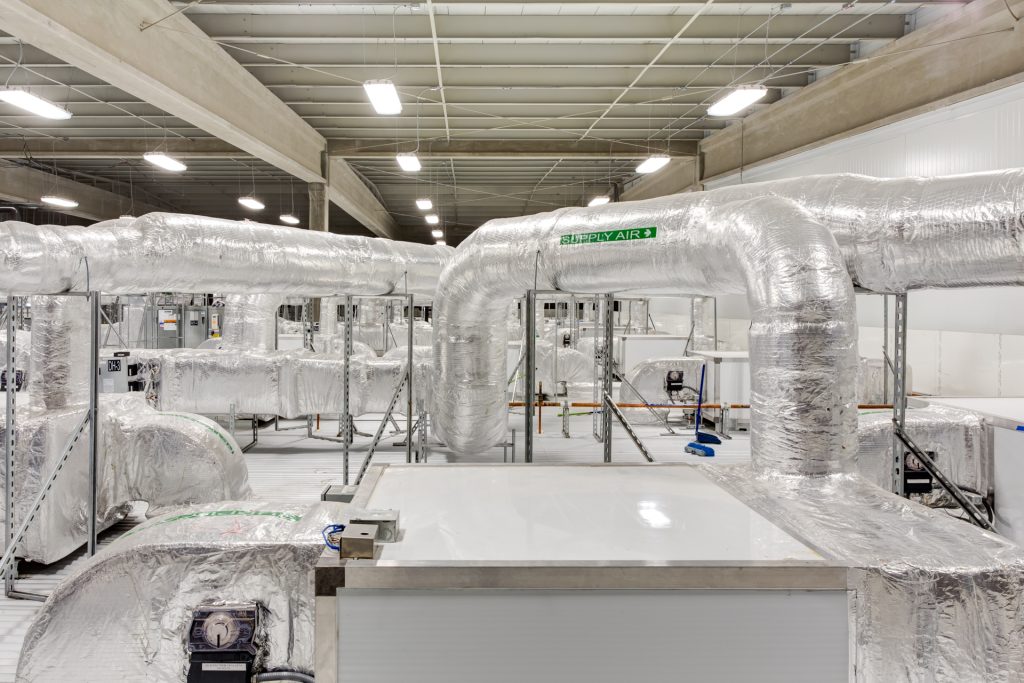
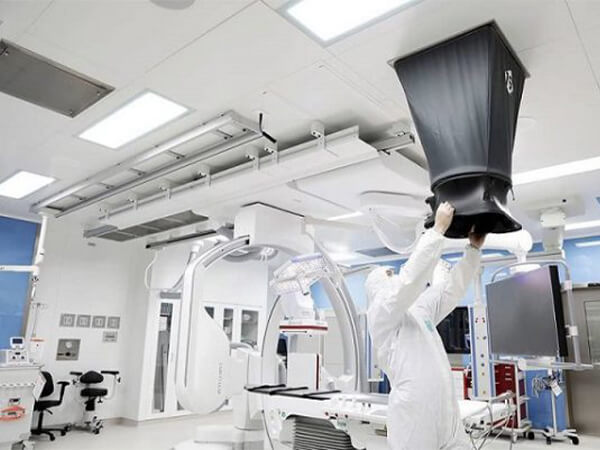
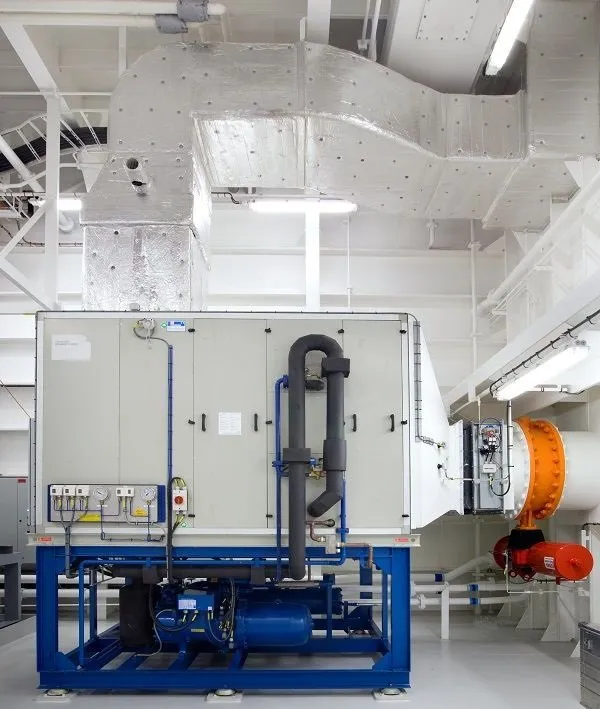
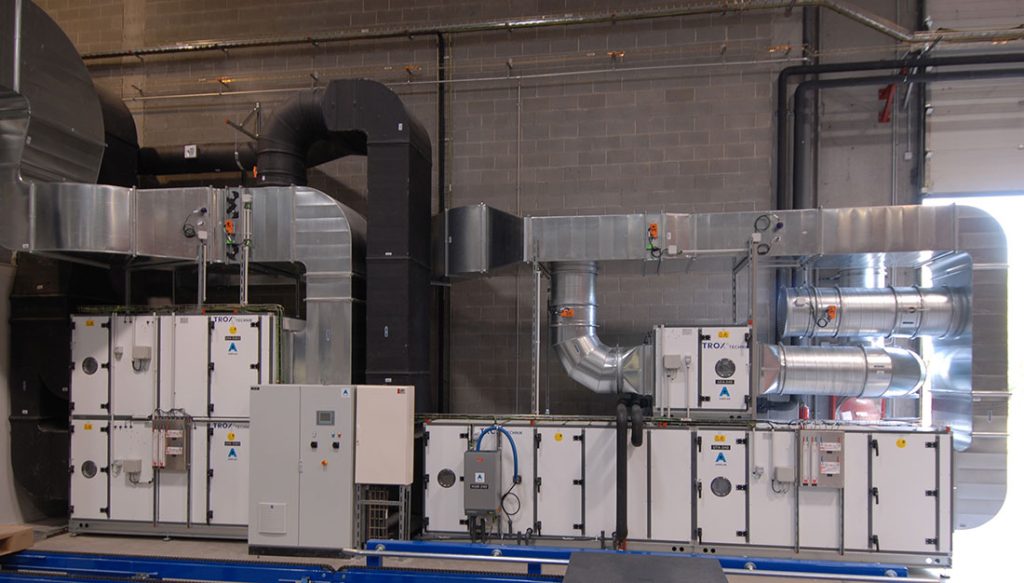
DRS engineers have the required expertise in order to maintain, service and repair cleanroom systems. It is key to maintain close control of design parameters within cleanroom suites, HVAC systems are not just designed to maintain temperature control for comfort. They perform an essential task in controlling particulate contamination and maintaining pressure gradients and humidity control of the desired space. There are many key components and conditions to maintain when servicing or maintaining such plant.
HVAC designs can vary greatly depending on specific process and product cleanliness requirements (ISO class level). This design strays from the usual HVAC system and calls for specialist knowledge to maintain and ensure daily operation and auditing requirements are met. Systems incorporate high-efficiency filters, humidity control elements, and other advanced features to ensure that air is clean, pressurized (to the correct room gradient), and the right temperature and humidity.
At DRS we can offer tailored solutions for servicing including site specific designed digital paperwork suites to adhere to stringent auditing requirements.
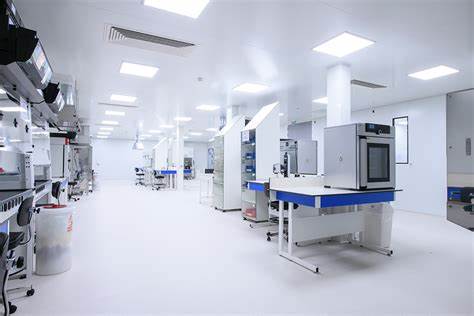
Cleanrooms use high-efficiency filters, humidity control elements, and other advanced features to ensure that air is clean, pressurized, and the right temperature and humidity.
The number of air changes per hour (ACPH) In short, ACPH measures how many times the system replaces the cleanroom’s air each hour. A high number of ACPH will remove more particles from the space.
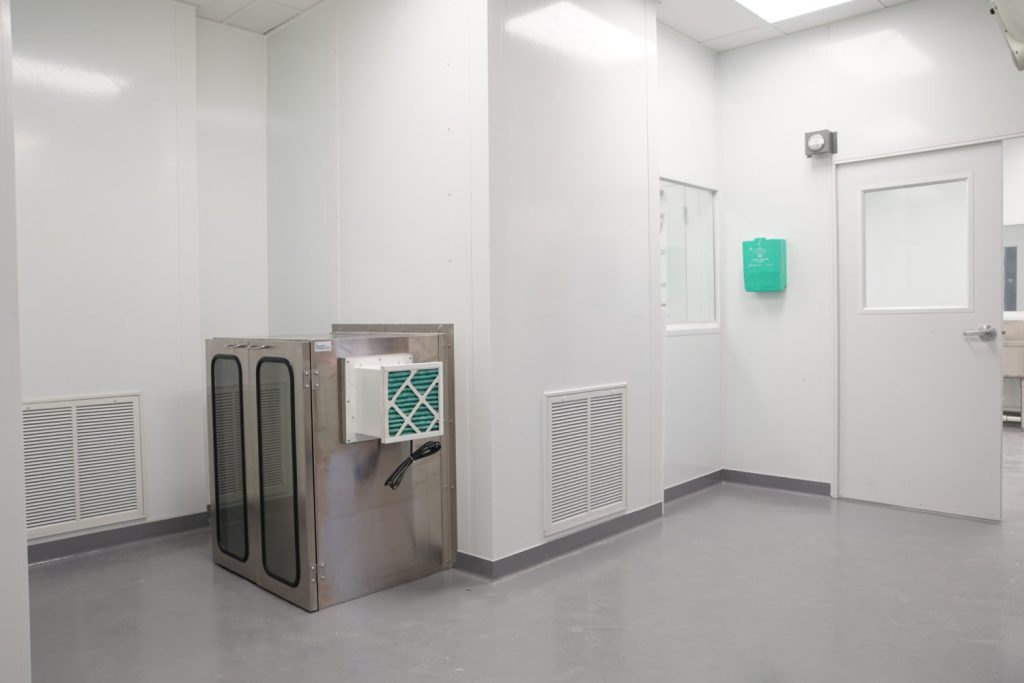
Maintaining pressure gradients within a suite is key to avoiding cross contamination. This can take the form of either positive or negative pressure.
Pharmaceutical, Aerospace and electronic cleanrooms often use positive pressure to prevent contamination from entering. The additional pressure ensures that contaminants outside the room cannot penetrate the working space.
Negative pressure might be required in cleanrooms or hospital isolation rooms requiring contaminants are kept inside the space. This protects the external environment from dangerous hazards.
The HVAC plant controls temperature and humidity (often very closely). Even small fluctuations of temperature and humidity can drastically affect product quality, especially in pharmaceutical or semiconductor manufacturing.
Controlling humidity in HVAC systems can involve multiple processes, including preheating, adding moisture (humidification), removing moisture (dehumidification), and reheating.
Other designs require humidity to be maintained within a narrow range, which requires the capability to both dehumidify and humidify the air.
Filtration is a major component in HVAC systems, keeping the air clean and maintaining lowest possible static pressure in the duct is the main function of filtration. High-efficiency filters remove the smallest particles, typically inexpensive filters are installed before the high efficiency filter.
Phone: 07894 454 511
Complete the below form
Quick
We can be with you within 24 hours with the right solution.
Simple
Quick and hassle free, we can to you or you can utilise our drop-off centres.
Reliable
Following all our work we provide you with full certification for your vehicle(s).